


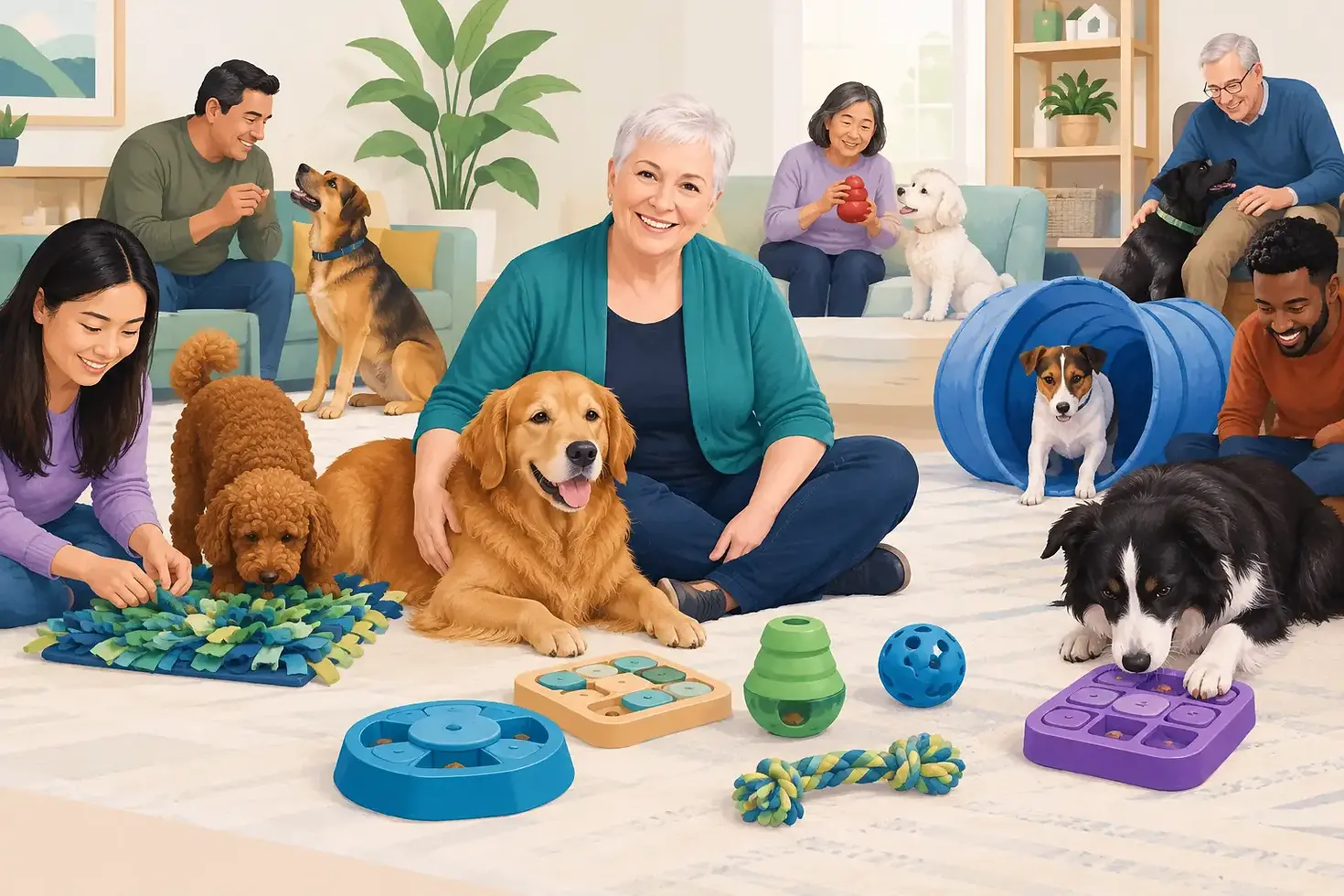
12 Dog Enrichment Ideas at Home for a Calmer Dog

A dog who has spent the day making choices, sniffing, chewing safely, and working for part of a meal is often easier to live with than a dog whose only activity was a quick walk around the block. Dog enrichment ideas at home are not about keeping your dog busy every minute. They are about meeting normal canine needs in ways that fit your household, your dog’s abilities, and your safety concerns.
For many families, enrichment is also a useful part of a behavior plan. It can give an energetic adolescent dog a better outlet, help a worried dog settle into a predictable routine, or make rainy Virginia afternoons less frustrating. It is not a cure for separation anxiety, reactivity, aggression, or resource guarding. Those concerns need thoughtful, individualized support. But the right activities can improve a dog’s daily quality of life while you work on the bigger picture.
Start With the Dog in Front of You
Enrichment should not be one-size-fits-all. A young Labrador may enjoy chasing scattered kibble across the yard; an older dog with arthritis may prefer a soft chew and an easy scent game on a non-slip rug. A dog who becomes possessive around food may need enrichment presented in a quiet, protected space, with no children or other pets nearby.
Choose activities that leave your dog relaxed or pleasantly tired, not frantic. If an activity causes hard staring, frantic vocalizing, guarding, or difficulty settling afterward, make it easier, shorten it, or choose something else. More excitement is not always better enrichment.
It also helps to use part of your dog’s normal daily food rather than adding a great deal of extra food. Measure the day’s meals first, then set aside a portion for training and enrichment. If your dog has dietary restrictions, use veterinarian-approved food or a small amount of an appropriate treat.
Food-Based Dog Enrichment Ideas at Home
Food activities are popular because they encourage natural foraging, licking, chewing, and problem-solving. They are especially practical for busy mornings or times when you need your dog safely occupied nearby.
1. Scatter Feed a Meal
Instead of placing breakfast in a bowl, toss a portion of kibble across a clean lawn, a snuffle mat, or a towel spread on the floor. Your dog gets to search with their nose, which is meaningful work for most dogs.
Begin in an open, easy area. As your dog learns the game, you can tuck a few pieces behind chair legs or under the edge of a cardboard box. Avoid scatter feeding around dogs who may compete over food, and skip it outdoors if wildlife, toxic plants, or other hazards are a concern.
2. Stuff and Freeze a Food Toy
A sturdy, dog-safe rubber food toy can turn part of a meal into a longer activity. Use kibble softened with warm water, canned dog food, plain pumpkin if it agrees with your dog, or another food your veterinarian has approved. Freezing the toy makes it last longer.
Start with an easy fill so your dog succeeds quickly. A toy packed too tightly can be frustrating, especially for a puppy or senior dog. Supervise until you know how your dog uses the toy and whether they try to chew off pieces.
3. Make a Simple Snuffle Towel
Place several pieces of kibble in the folds of a clean towel, loosely roll it, and let your dog sniff out the food. This is an inexpensive option for dogs who enjoy nose work but are not likely to shred or swallow fabric.
Take the towel away if your dog starts tearing, swallowing, or guarding it. For dogs with a history of resource guarding, do not reach in and remove a high-value item while they are using it. Plan the activity in a quiet area, allow them to finish, and trade only when appropriate to their established training plan.
4. Try a Muffin Tin Puzzle
Put a few treats in several cups of a muffin tin, then cover each cup with a tennis ball or another item too large to swallow. Your dog moves the balls to find the food. Keep the first attempt easy, with some cups uncovered, so your dog understands the game.
This activity works best with supervision. Some dogs will solve it gently; others may pick up and chew the balls or tip the entire tin. The goal is a manageable puzzle, not a test of patience.
Use Your Dog’s Nose More Often
A dog’s nose is one of their most powerful tools. Scent games can be surprisingly tiring without requiring long runs, jumping, or a large yard. They are a wonderful option during bad weather or for dogs whose physical exercise needs to be limited.
5. Play Find It
With your dog watching, toss a treat a few feet away and say, find it. Once they understand, place treats behind a table leg, beside a doorway, or in an open box while they wait briefly in another room with a family member.
Keep the hiding places easy at first. You want your dog to use their nose and succeed, not become discouraged. For a shy dog, start in familiar rooms and avoid suddenly placing food near objects that make them nervous.
6. Create a Box Search
Save a few clean cardboard boxes of different sizes. Place a treat in one open box, then let your dog investigate. Later, add crumpled packing paper or nest a smaller box inside a larger one.
This can be excellent enrichment for dogs who like to investigate and shred paper, but it is not appropriate for dogs who swallow cardboard. Supervision matters. Remove tape, staples, shipping labels, and anything that could be ingested before offering boxes.
7. Teach a Scent Cue
Choose one safe scent, such as a particular tea bag kept inside a vented container, and pair it with a reward. Begin by placing it in plain sight and rewarding your dog for approaching it. Over time, move it to easy hiding spots and encourage your dog to search.
Formal scent work can become a rewarding hobby, but the home version should stay simple and upbeat. A few successful searches are plenty. Stop while your dog is still eager.
Enrichment That Builds Everyday Skills
Not all enrichment involves food. Short training games offer dogs a chance to think, communicate, and earn reinforcement through cooperation. These activities are especially useful when you want more calm behavior around the house.
8. Practice a Settle on a Mat
Place a comfortable mat or bed in a low-traffic area. Reward your dog for stepping onto it, then for standing, sitting, or lying down there. Gradually add everyday distractions, such as you folding laundry or preparing dinner.
This is not about forcing a dog to stay still for long periods. It is about teaching that the mat predicts safety, rest, and good things. For a dog who is anxious around household activity, keep sessions brief and make the environment easier before asking for duration.
9. Set Up a Tiny Obstacle Course
Use a broom laid flat on the floor, a blanket draped over two chairs to create a wide tunnel, or cushions arranged for careful stepping. Invite your dog through with treats and praise. Keep every surface stable and low to the ground.
Avoid jumping challenges, slick flooring, or tight spaces for puppies, large dogs, seniors, and dogs with orthopedic concerns. Confidence comes from easy wins, not from pushing a dog past what feels safe.
10. Teach Helpful Household Cues
A few minutes spent practicing touch, hand target, come, leave it, or go to bed can enrich your dog’s day and make daily life smoother. Use small rewards and stop before either of you becomes frustrated.
For dogs with fear, reactivity, or aggression concerns, training should not be used to pressure them into tolerating scary situations. A reliable hand target in the living room is useful. Asking a frightened dog to perform cues near a trigger may be too much.
Calming Activities for Quiet Time
Some dogs need help transitioning from activity to rest. Chewing and licking can be soothing for many dogs, provided the item is safe for that individual dog.
11. Offer an Appropriate Chew
Choose a chew based on your dog’s size, chewing style, dental health, and history of swallowing objects. Avoid items that are so hard they could damage teeth, and supervise new chews closely. A dog who demolishes toys quickly needs a different option than a gentle chewer.
Chews should be given separately when multiple dogs live together. Even dogs who normally get along can become tense around a valued item.
12. Build a Predictable Wind-Down Routine
After a walk, training game, or scent search, offer a calm activity in the same resting area each day. Lower household activity when possible, provide water, and allow your dog to choose rest. Predictability can be particularly helpful for puppies and dogs who struggle to settle.
If your dog paces, pants, vocalizes, follows you constantly, or cannot relax even after appropriate exercise and enrichment, do not assume they simply need more activity. Pain, anxiety, medical conditions, and unmet behavior needs can all affect a dog’s ability to rest.
When Enrichment Needs Professional Guidance
Enrichment becomes more complicated when food, toys, or space trigger conflict. Dogs who guard resources, react to household members, show panic when left alone, or become intensely overstimulated need activities selected with care. The wrong setup can rehearse unsafe behavior or create more stress.
A personalized behavior plan can identify what your dog enjoys, what they can handle safely, and how enrichment fits alongside training and management. For families in the Greater Fredericksburg and Northern Neck areas, in-home coaching can be particularly valuable because the kitchen, living room, yard, and neighborhood are where these patterns actually happen.
Start small tonight: scatter a handful of your dog’s dinner in an easy search area, then notice what changes. The best enrichment is not the most elaborate project. It is the activity your dog can enjoy safely, confidently, and often.


Comments