


Can Anxious Dogs Learn? Yes, With the Right Plan

A dog who refuses a treat outside, barks at every passing person, or panics when you pick up your keys is not giving you a hard time. That dog is having a hard time. So, can anxious dogs learn? Absolutely. But they usually cannot learn well while their nervous system is in full alarm mode.
That distinction changes the training plan. An anxious dog does not need more pressure, harsher corrections, or repeated exposure to the thing that scares them until they "get used to it." They need enough safety, distance, predictability, and support to process what is happening. From that place, learning becomes possible.
Can Anxious Dogs Learn When They Are Afraid?
Yes, but fear affects how readily a dog can take in information. When a dog is under threshold - concerned, perhaps, but still able to eat, sniff, respond to a familiar cue, and recover - training can be productive. When the dog is over threshold, their body is prioritizing survival. You may see barking, lunging, freezing, frantic pulling, trembling, hiding, pacing, or an inability to take food.
At that point, asking for a perfect sit or insisting they stay near a trigger is rarely useful. The immediate goal is not obedience. It is helping the dog feel safe enough to recover.
This is why two dogs with the same behavior may need very different plans. One dog may bark at visitors because unfamiliar people are overwhelming. Another may bark because the door routine predicts excitement. The behavior looks similar, but the emotion, history, and training approach may not be the same.
Learning Starts Below Threshold
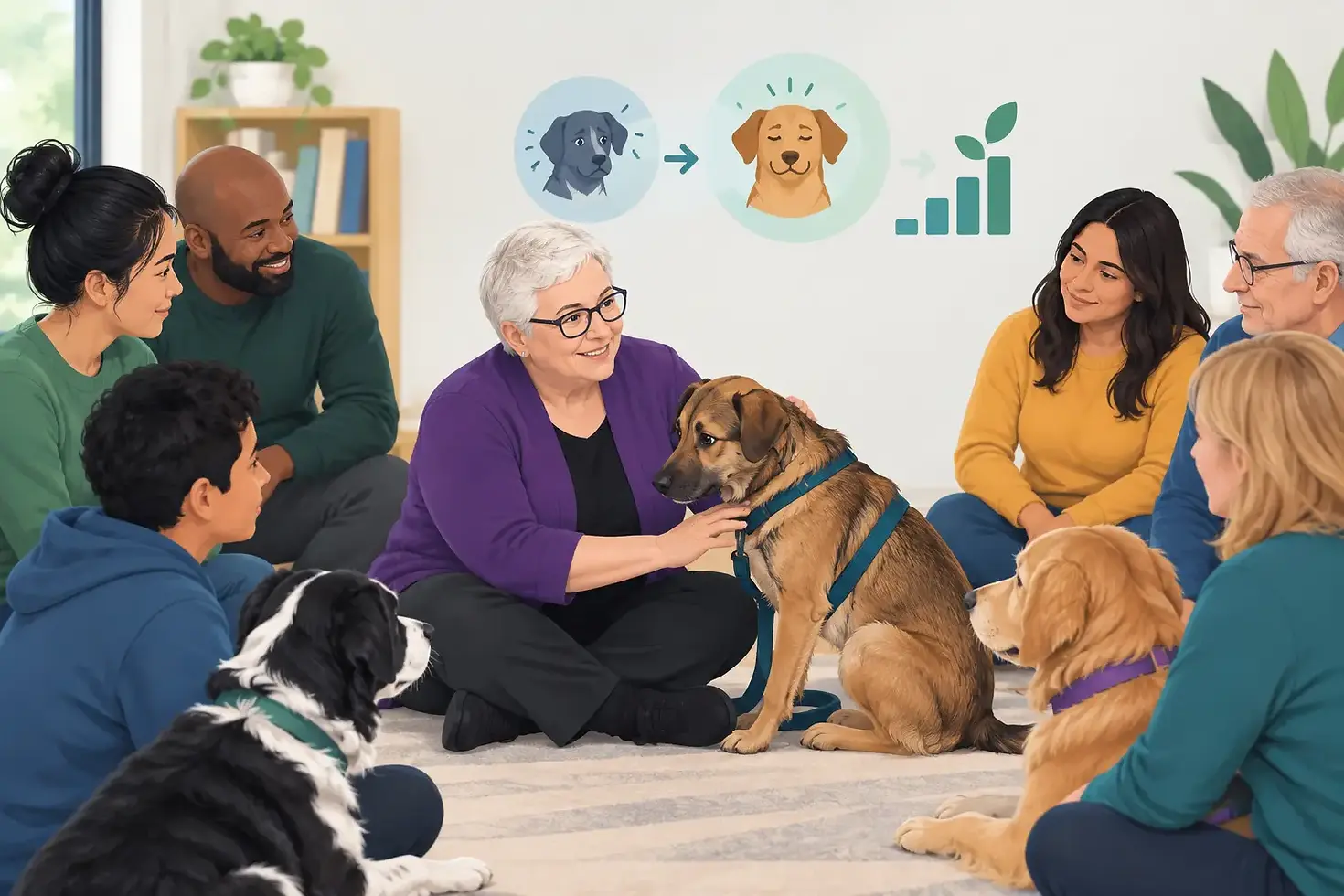
Think of threshold as your dog's learning zone. In that zone, your dog notices the worry but can still make choices. They may glance at another dog across the street, then turn back to you for a treat. They may hear a truck, pause, and continue walking. Those are meaningful moments for teaching.
Too close, too long, or too intense can push the dog over threshold. This is often called flooding: exposing a fearful dog to more than they can handle in the hope that fear will fade. Sometimes the dog becomes quiet, but quiet does not always mean comfortable. A dog may freeze or shut down because they do not see a safe option.
Effective behavior work usually uses gradual exposure paired with something the dog values. For example, a dog worried about strangers may see a person at a comfortable distance, receive high-value food, and then move away before anxiety rises. Over many carefully managed repetitions, the sight of a person can begin to predict good things instead of danger.
The distance matters. So does the dog's body language. If your dog cannot eat, cannot disengage, or is escalating, the session is too difficult. Moving farther away is not failure. It is good training.
Watch for the Small Signs
Anxiety is not always dramatic. Lip licking when no food is present, yawning, turning away, scanning, sudden sniffing, tucked posture, pinned ears, whale eye, and a closed mouth can all be signs that a dog is struggling. Some dogs become very busy and silly. Others become unusually still.
Learning your dog's early signals gives you time to adjust before a bark, lunge, snap, or panic response occurs. That protects progress and helps your dog trust that you will listen.
What Anxious Dogs Can Learn
Anxiety does not mean a dog is incapable of learning obedience, manners, or new coping skills. In fact, training can give an anxious dog useful choices and clearer communication. The key is choosing skills that fit the situation instead of expecting the dog to perform under impossible conditions.
A worried dog can learn to look at their person when they hear a sound, move with you in a U-turn, settle on a mat away from the front door, target a hand, or find treats scattered in the grass. These are not distractions meant to ignore fear. They are practical skills that can help lower arousal and create space.
For a dog anxious around other dogs, a reliable turn-and-go cue may be more valuable than a close heel. For a dog uneasy with visitors, going behind a baby gate with a stuffed food toy may be kinder and safer than requiring greetings. For a dog with separation anxiety, the lesson may begin with tolerating a few seconds of a departure routine, not being left alone until they panic.
That last example is especially important. Separation anxiety is not solved by letting a dog cry it out. Repeated panic can make the problem worse. A carefully structured plan builds absence tolerance in small increments while preventing as many full-panic absences as possible.
Make Training Easier Before You Make It Harder
The most effective changes often happen before a formal training session begins. If your dog rehearses panic at the window all afternoon, it will be harder to teach calm responses during a five-minute exercise. If every walk takes place on a crowded trail at the busiest time of day, your dog may have no room to succeed.
Management is not avoiding the problem forever. It is reducing preventable stress so learning can happen. Close blinds if the window triggers barking. Choose quieter walking times. Give guests clear instructions before they arrive. Use gates, leashes, and safe spaces to prevent uncomfortable encounters.
Then practice skills in easier settings. Teach a hand target in the kitchen before using it near a scary bicycle. Build a happy association with a mat when nobody is at the door before expecting your dog to settle during a delivery. Start where your dog can succeed, then change one detail at a time: distance, duration, movement, or distraction.
Trying to change all of them at once is a common reason dogs appear to "know it at home but not outside." They may know the skill. The environment may simply be too hard right now.
Reward Matters, but So Does Consent
Food is often a powerful training tool, especially for nervous dogs, but the goal is not to lure a dog into something frightening. If a dog will take chicken only while inching closer to a stranger, then bolts away once the food is gone, the dog was likely too uncomfortable.
Instead, use food to support a choice to observe from a safe distance, turn away, or move with you. Let the dog have an exit. Respecting that choice can build confidence far more effectively than persuading them to endure a greeting.
Some dogs are too worried to eat in difficult situations. That is valuable information, not stubbornness. Increase distance, shorten the session, or return to an easier environment. A dog who can eat, think, and recover is telling you the plan is more manageable.
Progress Is Rarely a Straight Line
A dog may handle a calm Tuesday walk beautifully and struggle on Saturday when there are children, scooters, wind, and several dogs nearby. That does not erase progress. Anxiety changes with sleep, pain, health, weather, hormones, past experiences, and the total stress a dog has carried that day.
Look for trends rather than perfection. Is recovery faster? Is your dog noticing triggers at a greater distance without reacting? Are they choosing to check in with you more often? Is their body softer during familiar routines? These changes matter because they show the dog is gaining emotional capacity, not simply suppressing behavior.
Keep sessions short enough that they end well. A few successful minutes can be more useful than a long outing that leaves everyone overwhelmed. Record what happened, including distance, triggers, and recovery time. Patterns become much easier to see when you are not relying on memory after a difficult day.
When Professional and Veterinary Support Helps
Some anxious dogs need more than a basic training plan. If your dog is biting or threatening to bite, cannot safely be around visitors or other animals, is panicking when left alone, has stopped eating in normal situations, or seems to be getting worse, seek qualified help promptly.
A veterinary exam is also a sensible first step when anxiety appears suddenly or changes sharply. Pain, sensory changes, thyroid concerns, cognitive changes, and other medical issues can affect behavior. Medication is not a shortcut or a failure. For some dogs, appropriately prescribed medication lowers distress enough that they can finally participate in learning.
A personalized behavior plan can identify the real triggers, set up practical management for your household, and help everyone practice safely in the places where the problem actually occurs. That may be your front door, neighborhood sidewalk, car, veterinary office, or the quiet moments before you leave home.
Your anxious dog does not need to become the boldest dog at the park. They need a life where they feel safer, have choices, and can learn at a pace their nervous system can handle. Patient, well-planned practice can make that life larger and more comfortable, one successful moment at a time.

Comments