


Bite History Rehabilitation for Safer Dog Lives

A dog bite can change daily life in an instant. Walks become stressful, visitors require careful planning, and even ordinary routines can feel uncertain. Bite history rehabilitation is not about labeling a dog as bad or promising that every risk will disappear. It is a thoughtful process of understanding what happened, protecting people and animals now, and helping the dog develop safer responses over time.
For many families, the hardest part is knowing where to begin. A bite may have happened during handling, around food, when a visitor entered the home, on a walk, or after a dog felt cornered or frightened. The details matter. So does the dog's overall health, environment, and history. A useful plan starts with curiosity rather than blame.
What Bite History Rehabilitation Really Means
Rehabilitation means addressing the behavior that led to the bite while building practical safety habits around the dog. It usually includes management, behavior modification, skill building, and clear household routines. The goal is not to force a dog to tolerate situations that overwhelm them. The goal is to help them feel safer and make safer choices whenever possible.
A bite history is not a diagnosis. Dogs bite for different reasons, including fear, pain, resource guarding, frustration, territorial behavior, predatory behavior, and conflict around handling. A dog who bites when touched while sleeping needs a different plan than a dog who bites unfamiliar dogs on leash. Treating every bite as the same problem can waste valuable time and may increase risk.
It is also worth being honest about the trade-offs. Some dogs make major improvements and can enjoy broader, more comfortable lives. Others may always need boundaries around certain triggers, people, or settings. Progress is meaningful even when the long-term plan includes management.
Start With Safety, Not Exposure
After a bite, many well-meaning owners try to “socialize” the dog by putting them around more people or dogs. That can backfire. Repeated exposure without enough distance, support, or choice can rehearse the very behavior you are trying to change.
Instead, reduce opportunities for another incident while you learn more. This may mean using doors, gates, pens, leashes, separate rooms, or carefully planned arrival routines for visitors. It can mean skipping crowded trails, dog-friendly events, or family gatherings for now. Management is not failure. It is responsible prevention that gives everyone room to breathe.
A properly conditioned basket muzzle is often an important safety tool. A basket muzzle allows a dog to pant, drink, and take treats while adding a layer of protection. It should be introduced gradually and positively, never used as punishment or simply strapped on during a crisis. The right muzzle plan can make veterinary visits, walks, and training sessions safer while protecting the dog from the consequences of another bite.
If the bite broke skin, seek appropriate medical attention for the person involved and follow local reporting requirements. Keep records of what happened, including the date, location, circumstances, and any warning signs you noticed. This information is useful for your veterinarian and behavior professional, especially in cases involving insurance, animal control, or court-related concerns.
Look Closely at the Bite Story
A behavior professional will want more than a quick description such as “he bit out of nowhere.” Dogs often communicate discomfort before a bite, but those signals can be subtle or missed in a fast-moving moment. Freezing, turning away, lip licking, a hard stare, growling, showing the whites of the eyes, or moving away may all be part of the picture.
Consider what happened immediately before the bite. Who was present? What was the dog doing? Was there food, a toy, a bed, a doorway, a leash, a child, another animal, or physical contact involved? How close was the person or dog? Did the dog have an escape route?
The severity of the bite also helps guide decisions. A snap that made no contact calls for attention, but it is different from a bite that caused punctures or repeated contact. Frequency matters too. One incident during a painful ear infection is not the same as a pattern of escalating bites across multiple situations.
Rule Out Pain and Medical Contributors
Behavior is closely connected to physical health. Dogs may react defensively when they are hurting, losing vision or hearing, experiencing neurological changes, or dealing with skin, dental, digestive, or orthopedic discomfort. A dog who suddenly resents handling needs a veterinary evaluation, even if the behavior appears to be “training related.”
Medication can also be part of a treatment plan for some dogs with severe anxiety, panic, or impulsivity. Medication does not teach new skills by itself, and it is not a shortcut. When prescribed and monitored by a veterinarian, however, it may lower distress enough for learning to become possible.
Build Skills at a Safe Distance
Once safety measures are in place, behavior modification can begin. This work should happen below the dog's threshold, meaning at an intensity where the dog can still notice the trigger, eat, think, and respond without tipping into panic or aggression.
For a dog fearful of visitors, that might begin with hearing a knock at a low volume while receiving something wonderful behind a gate. For leash reactivity, it may begin far enough from another dog that your dog can look, then turn back to you for reinforcement. For resource guarding, it may begin by teaching that a person approaching predicts something better rather than a loss.
The pace matters. Moving too quickly can create setbacks. Moving in small, repeatable steps helps the dog develop a new emotional association and gives the owner a reliable way to practice. Training plans should also teach useful alternatives: moving to a station, turning away, coming when called, wearing a muzzle comfortably, settling behind a barrier, and responding to handling cues.
Why the Household Plan Matters
Dogs do not live in training sessions. They live with the people, routines, noises, visitors, and surprises of a household. That is why bite history rehabilitation has to fit real life.
Everyone who interacts with the dog needs to understand the plan. If one family member trades for a toy while another reaches in and takes it, the dog receives mixed information. If a dog is kept separate from visitors most of the time but is occasionally pushed into greetings, the risk remains unpredictable.
Children need especially clear rules. They should not be responsible for training or handling a dog with a bite history. Adults should actively supervise, use barriers, and prevent interactions that place either the child or dog in a difficult position. Loving a dog and respecting their limits can happen at the same time.
When Professional Help Is Needed
Any dog that has bitten deserves a thoughtful assessment, but prompt professional support is particularly important when skin was broken, bites are becoming more frequent or severe, the target is a child, aggression occurs with little apparent warning, or the dog has multiple triggers. Cases involving legal concerns, landlord requirements, or community safety also benefit from organized documentation and a clear plan.
Avoid methods that rely on intimidation, flooding, or punishment for growling. Growling is valuable information. If a dog learns that warning signals are unsafe to express, they may skip those signals while still feeling distressed. Effective intervention addresses the cause of the behavior while keeping people safe.
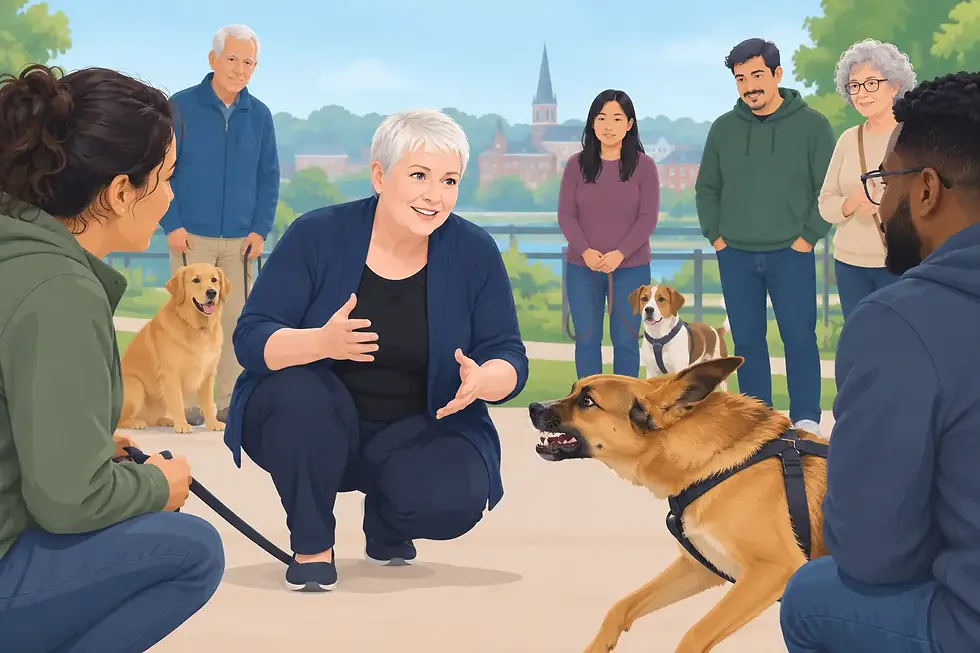
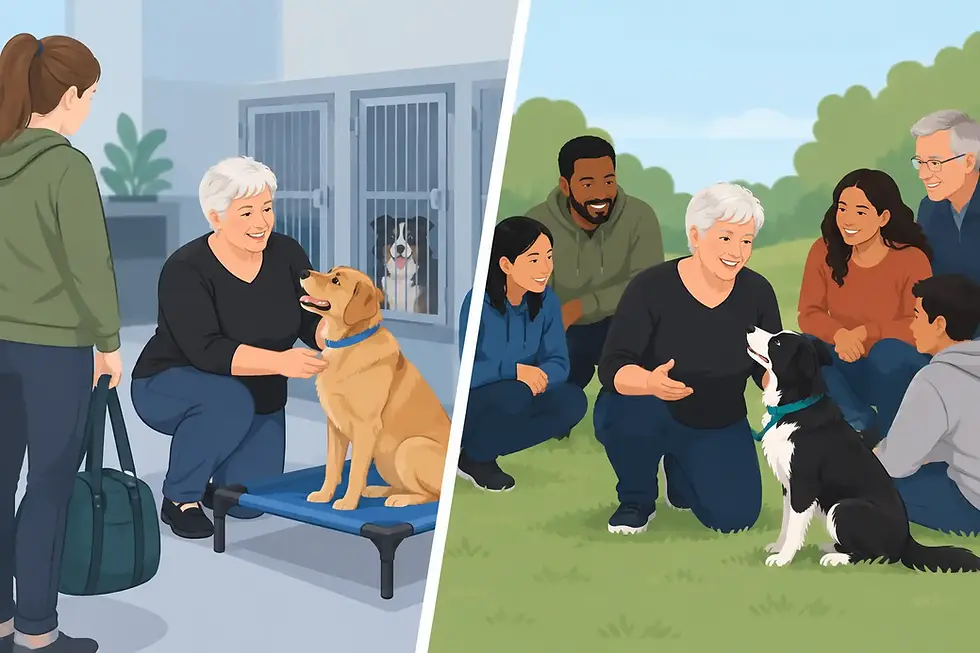
An individualized plan can be practiced where the problem actually occurs: at home, on walks, during handling, or in carefully arranged public settings. For families in the Greater Fredericksburg and Northern Neck areas, in-person coaching can make those real-world details easier to address. Virtual consultation can also be useful when observation, household planning, and coaching are the priority.
Progress May Look Different Than You Expected
Success is often quieter than people expect. It may look like a dog choosing to walk away instead of freezing. It may be a relaxed vet visit with a muzzle, a visitor routine that runs smoothly, or a family that knows exactly how to prevent a difficult situation.
Keep the focus on safety, comfort, and quality of life rather than proving that a dog can handle every environment. A dog does not need to greet strangers, attend crowded events, or share every resource to have a full and happy life. With patient support and realistic expectations, many dogs with a bite history can build safer patterns and stronger trust with the people who care for them.

Comments