


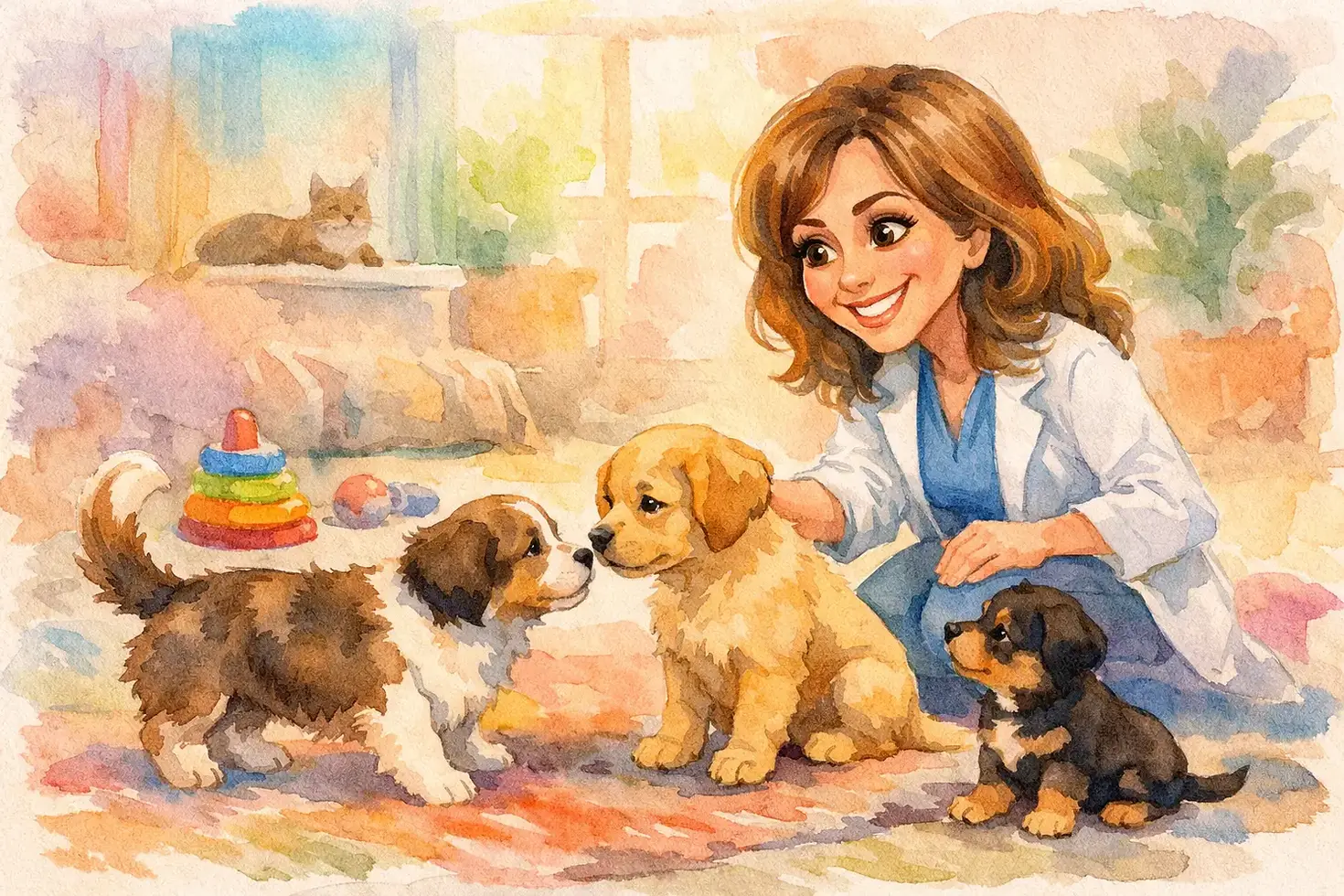
Puppy Socialization at Home for Real Life

The puppy who freezes when the blender starts, barks at a neighbor’s stroller, or panics at the veterinary office did not necessarily miss a puppy class. Often, they simply needed more carefully managed practice with everyday life. Puppy socialization at home gives your dog a secure base from which to learn that new sounds, surfaces, people, handling, and routines can be safe.
Socialization is not about making a puppy greet everyone or tolerate every situation. It is the process of building positive, workable associations during a period when puppies are especially open to learning about the world. Done thoughtfully, it can reduce the risk of fear-based behavior later. Done too quickly, it can create the very anxiety owners hoped to prevent.
What Puppy Socialization at Home Really Means
Many owners picture socialization as a busy puppy playgroup. Play with appropriate dogs can be useful, but it is only one small piece of the picture. A well-socialized dog is not necessarily the dog who rushes happily toward every person and dog. It is the dog who can notice ordinary life, recover from surprises, and remain comfortable enough to listen to their person.
At home, your puppy can learn about household sounds, visitors, grooming, car rides, different floor textures, gentle restraint, hats, umbrellas, rolling trash cans, and people moving in unexpected ways. These experiences count because they are part of the life your dog will actually live.
The goal is calm confidence, not constant excitement. If your puppy learns that seeing something new can predict praise, distance, treats, or a chance to retreat, they are developing a healthy sense of safety and choice.
Start With Your Puppy’s Body Language
A puppy does not need to be barking or trying to flee to be overwhelmed. Early signs can be subtle: turning their head away, licking their lips when no food is present, yawning, suddenly sniffing the ground, pinning ears back, tucking the tail, or refusing treats they normally love.
Watch what happens after your puppy notices something unfamiliar. A comfortable puppy may look, take a treat, and then look again with relaxed movement. A worried puppy may stare hard, stop moving, lean away, or try to climb into your lap. When you see stress, do not coax your puppy closer to “get used to it.” Increase distance, lower the intensity, or end the session.
That response is not coddling. It teaches your puppy that you will pay attention and keep them safe. Dogs who trust their handlers are often better able to recover when life becomes unpredictable.
Keep New Experiences Small
One new thing at a time is plenty for a young puppy. Rather than inviting six relatives over for a loud afternoon, arrange for one calm visitor to sit down, ignore the puppy at first, and toss a treat nearby. Let the puppy decide whether to approach.
The same rule applies to sights and sounds. You might run the vacuum in another room for a few seconds while your puppy eats a special treat, then turn it off. Tomorrow, repeat at an easy level. If your puppy remains relaxed, you can gradually work closer. If they hesitate or stop eating, the exercise was too difficult for that day.
Short, successful repetitions are far more valuable than one long, intense exposure.
Build Confidence Into Everyday Routines
Your home already offers many useful socialization opportunities. Walk your puppy across a bath mat, a cardboard box laid flat, a metal baking sheet, and a folded towel. Pair each surface with treats or a favorite toy, and allow the puppy to step away if they wish. Never force them onto something that feels scary.
Practice gentle handling when your puppy is calm and sleepy, not when they are already overexcited. Briefly touch a paw, then reward. Lift an ear flap, reward. Touch the collar, reward. Look at one tooth, reward. These tiny exercises can make future grooming and veterinary care much less stressful.
A crate or pen can also support socialization when it is introduced as a pleasant resting place. Give your puppy a chew or meal in the space while normal household life continues at a comfortable volume. This helps them learn that people walking around, dishes clinking, and a television playing do not always require action.
Introduce People Without Creating Pressure
Puppies benefit from seeing a range of people, including older adults, children who can follow instructions, people wearing hats, and people using canes or walkers. But your puppy does not need to interact closely with every person they see.
Ask visitors to avoid reaching over the puppy’s head, staring, or repeatedly calling the puppy toward them. A side-facing posture and a tossed treat are usually much friendlier. If the puppy chooses to approach, the visitor can offer a gentle scratch under the chin or on the chest, then pause. A pause lets the puppy communicate whether they want more contact.
Children should always be actively supervised around puppies. Even a sweet child may hug, chase, corner, or handle a puppy too roughly without meaning harm. Give children simple jobs instead, such as tossing treats when the puppy sits calmly or helping scatter kibble in the grass for a sniffing game.
Thoughtful Exposure Beyond Your Door
Home is the starting point, not a permanent boundary. Once your veterinarian confirms it is appropriate for your puppy’s health and vaccination status, carry your puppy or use a clean blanket or wagon to observe the neighborhood. Sit far enough from activity that your puppy can watch people, bicycles, and traffic without becoming alarmed.
For puppies ready to walk in public spaces, choose quiet locations and brief outings. A five-minute visit to a calm park edge can be more productive than an hour at a crowded event. Let your puppy watch the world, take treats, sniff, and leave while they are still doing well.
Dog-to-dog socialization deserves special care. Avoid assuming that every friendly-looking dog is a good teacher. Adult dogs may be uncomfortable with puppies, and high-energy greetings can overwhelm a young dog quickly. One known, healthy, socially skilled dog in a controlled setting is often more beneficial than a chaotic dog park.
Avoid Flooding and Forced Greetings
Flooding means exposing a dog to something scary at an intensity they cannot handle, hoping they will eventually stop reacting. Examples include holding a puppy near a loud lawn mower, making them stay while children crowd around, or dragging them toward another dog. A puppy may become quiet in these moments, but quiet does not always mean comfortable. They may be shutting down.
Instead, work below your puppy’s fear threshold. If they are nervous about the delivery truck, begin by feeding treats indoors when the truck passes at a distance. If they worry about strangers, let them watch people from across the street. Progress depends on the individual puppy, not a calendar.
There is also a difference between socialization and obedience. Asking for a sit can be helpful when your puppy is comfortable, but it should not be used to hold them in place during a frightening interaction. Safety and emotional comfort come first.
Make a Simple Plan for the Week
A written plan helps families avoid cramming too much into one day. Choose a few low-pressure experiences and repeat them until they are easy. For example, you might focus on handling and household sounds one week, then calm visitors, brief car rides, and watching neighborhood activity the next.
Keep notes on what your puppy saw, how far away they were, whether they accepted food, and how quickly they relaxed afterward. Patterns become clearer when you write them down. You may discover that your puppy enjoys new people but struggles with fast movement, or handles noises well but worries about unfamiliar surfaces.
If your puppy consistently avoids new experiences, startles easily, growls, snaps, guards food or toys, or cannot settle after a stressful event, get individualized help early. A personalized plan can prevent a small concern from becoming a larger behavior problem. Ask Dr. Caryn works with families in the places these challenges happen, from the living room to real-world outings.
Your puppy does not need a packed social calendar to grow into a capable companion. They need patient exposure, room to make choices, and a person who notices when “a little challenge” has become too much. Each calm, positive moment at home helps teach them that the world is worth exploring.


Comments