


Fearful Dog Behavior Training That Builds Trust
- Caryn Self Sullivan, PhD

- Jul 14
- 5 min read
A dog who freezes at the sight of a visitor, backs away from a leash, or erupts into barking on a walk is not being stubborn. They are telling you that something feels unsafe. Fearful dog behavior training begins by listening to that message rather than trying to overpower it.
Fear can make ordinary routines feel exhausting for both ends of the leash. A simple walk may require scanning for people, dogs, trucks, and sudden noises. Family gatherings can become stressful. Even getting the dog into the car or through the veterinary office door may feel like a major event. The good news is that fear is not a fixed personality trait, and thoughtful behavior work can make daily life feel safer and more manageable.
Start With Safety, Not Obedience
When a fearful dog reacts, owners are often told to make the dog sit, stay, or “get used to it.” Basic cues can be useful, but they do not solve the feeling underneath the behavior. A dog cannot learn well when they are overwhelmed. Before asking for obedience, we need to help the dog stay far enough from the scary thing that they can notice it without panicking.
This is called working under threshold. For one dog, that may mean watching a stranger from across a parking lot. For another, it may mean hearing guests talk from behind a closed door while enjoying a favorite treat. Distance, quiet, predictable movement, and a clear escape route all matter.
Safety also means preventing rehearsals of frightening situations whenever possible. If your dog is terrified of visitors, repeatedly bringing them into a crowded room will not build confidence. If your dog lunges at dogs on a narrow trail, choosing a wider walking route or a quieter time of day can give everyone room to breathe. Management is not giving up. It is the foundation that makes training possible.
Rule Out Physical Causes First
A sudden change in behavior deserves a veterinary conversation. Pain, hearing or vision changes, thyroid concerns, neurological conditions, and other medical issues can make a dog more reactive, withdrawn, or easily startled. A dog who once welcomed touch but now avoids being handled may be communicating discomfort.
This matters for puppies, adult dogs, and seniors alike. Behavior and health are closely connected, so a training plan should account for the dog’s whole picture. In some cases, a veterinarian may also discuss medication that helps reduce severe anxiety enough for behavior modification to work. Medication is not a shortcut or a failure. For the right dog, it can be one part of a humane treatment plan.
Learn What Fear Looks Like Before It Gets Loud
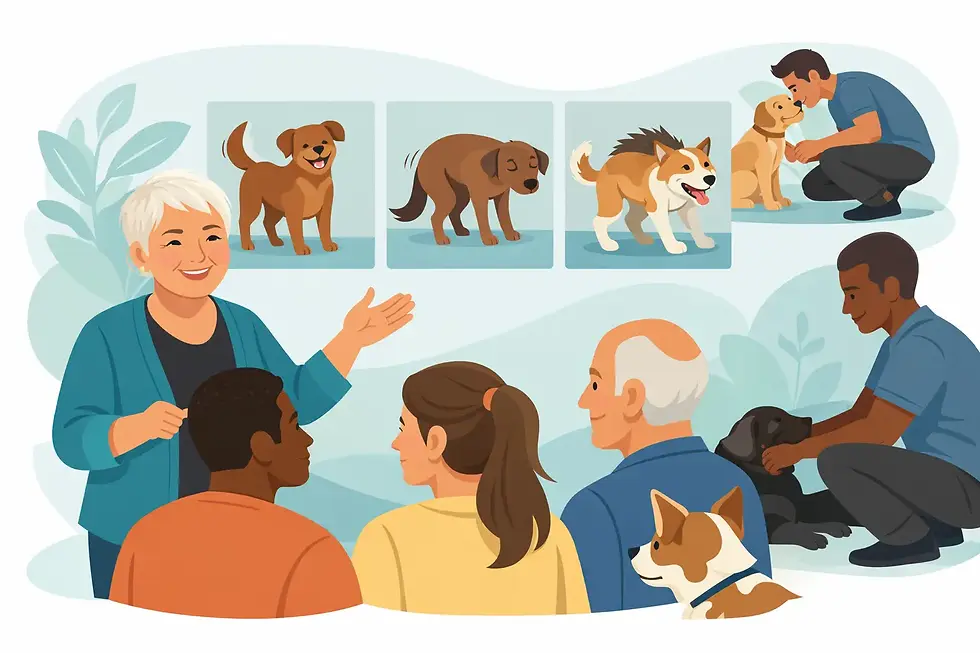
Barking, growling, snapping, and lunging are easy to notice, but they are often late-stage signs of distress. Many dogs try quieter communication first. They may turn their head away, lick their lips, yawn when they are not tired, lower their body, tuck their tail, lift a paw, or suddenly become very still.
A dog can also look “calm” when they are actually shut down. Freezing, refusing food, moving slowly, or allowing unwanted handling without resistance may mean the dog is overwhelmed, not comfortable. Reading these signals gives you a chance to adjust before the dog feels forced to escalate.
Keep a simple record for a week or two. Note what happened right before your dog became worried, how far away the trigger was, what your dog did, and how long recovery took. Patterns often appear quickly. Perhaps your dog handles one person but not groups, is comfortable with dogs outdoors but not in tight indoor spaces, or reacts more strongly after dark. Those details shape an effective plan.
How Fearful Dog Behavior Training Builds Confidence
The most effective fearful dog behavior training changes the dog’s emotional association with a trigger in small, repeatable steps. The dog sees, hears, or experiences something mildly concerning at a manageable level, and something good follows. Over time, the scary thing begins to predict safety rather than trouble.
For example, if your dog worries about people passing on walks, begin at a distance where your dog can see a person and still eat, sniff, and respond to you. When a person appears, offer small, high-value treats. When the person is gone, the treats stop. Your dog is not being bribed into tolerating fear. They are learning that the appearance of a person changes the environment for the better.
The pace matters. If your dog stops taking food, stiffens, stares, tries to flee, or reacts, the exercise was too difficult. Increase distance, shorten the session, or choose a quieter location. Progress rarely moves in a perfect straight line. Weather, sleep, visitors, pain, and a stressful morning can all affect a dog’s capacity on a given day.
Give Your Dog Useful Choices
Choice is powerful for fearful dogs. Whenever it is safe, let your dog move away, pause, investigate, or decline interaction. Do not require them to greet strangers, tolerate petting, or approach unfamiliar dogs to prove they are improving.
Teach simple skills away from triggers first: a cheerful U-turn, moving behind you, finding treats on the ground, targeting a hand, or going to a mat. These are not party tricks. They give the dog predictable options when the environment feels uncertain. They also help owners respond early instead of waiting for a full reaction.
Keep Sessions Short and Specific
Long exposure sessions often create fatigue, not confidence. A few successful minutes can be far more valuable than thirty difficult ones. End while your dog is still coping well, then give them time to rest.
Work on one challenge at a time when possible. If your dog is worried about visitors, do not combine a visitor practice session with nail trimming and a noisy household. Small changes are easier for the dog to process and easier for you to evaluate.
What Not to Do With a Fearful Dog
Avoid punishment for fear-based behavior. Leash corrections, yelling, intimidation, and forcing a dog closer to what scares them may suppress visible behavior temporarily, but they can increase the underlying fear. A dog who learns that growling is punished may stop growling and move directly to a bite when they feel trapped.
“Flooding” is another common mistake. This means placing a dog in an intense situation and waiting for them to get over it. Some dogs appear to shut down, but that does not mean they feel safe. Trust grows when the dog experiences manageable success, not when they learn escape is impossible.
Be cautious with reassurance, too. Speaking softly and staying present will not cause fear, despite old advice to the contrary. However, frantic soothing while continuing to push the dog into a hard situation does not help. Calm support works best alongside a practical change: create distance, reduce pressure, and give the dog a simple next step.
When Professional Support Is the Safest Next Step
Professional guidance is especially valuable when fear involves growling, snapping, biting, severe avoidance, panic, guarding, or a decline in quality of life. It is also wise to get help when children, visitors, delivery workers, or other pets could be affected. These situations call for individualized assessment, not generic advice from social media.
An in-home or real-world assessment can reveal details that are easy to miss in a group setting: where the dog rests, how family members move around them, what happens at the front door, and which routines create stress. The plan should fit the household, including the dog’s history, health, environment, and the owner’s realistic time and safety needs.
For families in the Greater Fredericksburg and Northern Neck areas, Ask Dr. Caryn provides personalized behavior support in the places where these challenges actually happen, from homes and veterinary offices to parks and walking routes.
Your dog does not need to become the life of the party to have a good life. The meaningful goal is a dog who feels safer, recovers more easily, and knows that the people they trust will listen when they say, “This is too much.”


Comments