


What Is a Court Ordered Dog Behavior Evaluation?

A bite report, a complaint from a neighbor, or an incident at a public park can quickly turn an ordinary dog-owner concern into a legal one. A court ordered dog behavior evaluation is not a punishment for a dog, nor is it simply a basic obedience test. It is a structured assessment intended to help the court understand the dog’s behavior, the circumstances surrounding an incident, current safety concerns, and realistic options for reducing future risk.
For owners, the process can feel frightening and deeply personal. Your dog is part of your family, but the court’s responsibility is public safety. The most helpful approach is to take the order seriously, gather accurate information, and work with a qualified professional who understands both behavior and the practical demands of a legal case.
Why a Court May Order an Evaluation
Courts, local authorities, landlords, or attorneys may request behavioral input after a bite, a dangerous-dog designation, repeated at-large complaints, an alleged attack on another animal, or a dispute involving housing or custody. The exact purpose depends on the wording of the order and the laws that apply where the case is being heard.
In some cases, the central question is whether the dog presents an ongoing risk. In others, the court may want recommendations about containment, muzzle conditioning, training, handling rules, supervision around children, or whether the dog can safely remain in a particular home. An evaluation may also help distinguish between a one-time event with clear contributing circumstances and a broader pattern of concerning behavior.
That distinction matters. A dog that snapped after being cornered while injured may need a very different plan from a dog with a documented history of pursuing, biting, and re-engaging with unfamiliar people. Good behavioral work does not minimize a serious incident, but it does examine what actually happened rather than relying on labels alone.
What a Court Ordered Dog Behavior Evaluation Examines
A meaningful evaluation begins well before anyone asks the dog to perform a cue or meet a stranger. The evaluator should review the dog’s history, daily environment, health status, prior training, and the specific incident or incidents involved.
Owners may be asked about the dog’s age, breed or known background, acquisition history, household members, routines, veterinary care, medications, previous behavior concerns, and triggers. Details about the event are especially important: where it happened, who was present, what occurred immediately before it, whether the dog was restrained, what the person or animal did, the type and location of injuries, and how the dog behaved afterward.
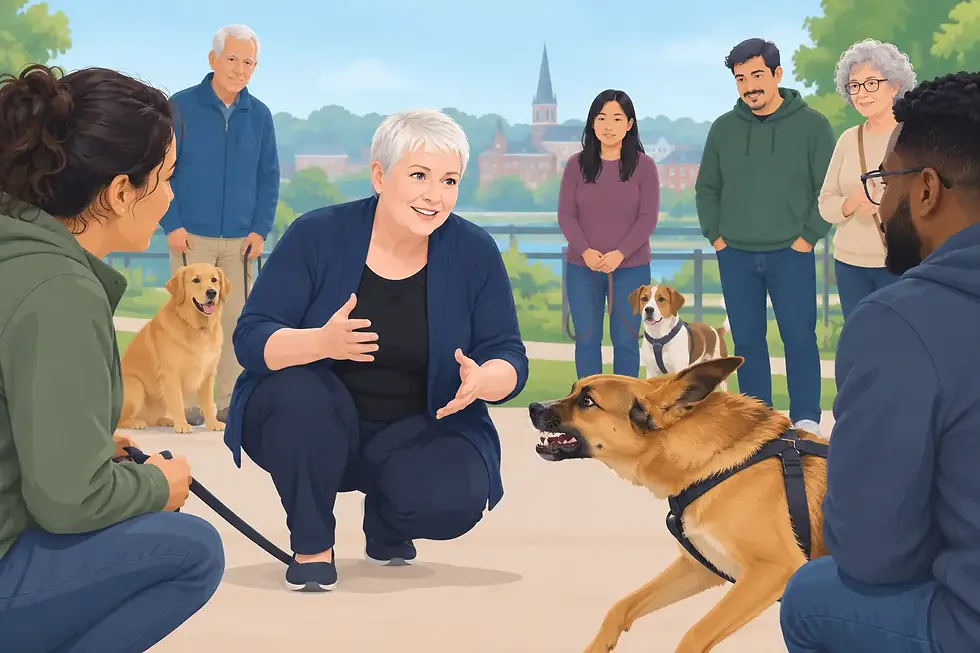
The dog’s body language and responses are also observed. Depending on safety needs, this may include the dog’s response to distance, movement, handling, visitors, other dogs, food, resting spaces, or unfamiliar environments. It should never mean forcing a fearful or reactive dog into an overwhelming situation just to see what happens. Provoking a dog can create unnecessary danger and produces poor information.
A careful evaluator considers several questions at once:
Is the behavior rooted in fear, conflict, frustration, guarding, predatory behavior, pain, territorial behavior, or another cause?
How predictable are the triggers, and how much warning does the dog give before reacting?
What is the dog’s bite history, including frequency, severity, and ability to disengage?
Can the household reliably follow a safety and behavior plan?
What changes are likely to reduce risk in the real settings where the dog lives?
No evaluation can promise that a dog will never bite. Behavior is influenced by context, health, handling, environment, and learning history. What a well-supported assessment can do is identify risk factors, management needs, and the level of commitment required going forward.
Behavior assessment is not a temperament test
People sometimes expect a single standardized test to provide a final answer about whether a dog is “good” or “bad.” Real behavior is more complicated. A dog may appear calm in a quiet room yet react strongly when confined, startled, approached while eating, or confronted by another dog on a narrow trail.
A useful assessment looks at the dog in context. It also recognizes that a friendly dog can bite under certain conditions and that a dog with a serious history may still make progress when the right safety measures and behavior plan are consistently in place.
Prepare Before the Appointment
Start by reading the court order word for word. It may identify required credentials, a deadline, questions the evaluator must answer, whether a written report is needed, and who must receive that report. If any part is unclear, speak with your attorney or the court clerk about procedure. A behavior professional can explain the assessment process, but should not provide legal advice unless they are qualified to do so.
Bring or organize relevant records. This may include veterinary records, vaccination history, photographs of the dog’s living space and containment setup, prior training records, incident reports, animal control paperwork, witness statements provided to you, and any bite-related medical documentation you are legally permitted to share. Do not alter, hide, or embellish information. Accurate details give the evaluator the best chance of making sound recommendations.
Before the appointment, follow sensible safety practices. Use secure equipment, prevent access to known triggers, and avoid putting the dog in situations that are likely to create another incident. If a muzzle is appropriate, use one the dog has been humanely conditioned to wear. Do not arrive with a dog loose in the car, on a retractable leash, or wearing equipment you cannot control.
It is also wise to schedule a veterinary examination if pain, illness, sensory changes, or medication effects could be involved. Ear infections, orthopedic pain, thyroid concerns, dental disease, and cognitive changes can all affect behavior. Medical information does not excuse unsafe behavior, but it can be an essential part of understanding it.
What a Useful Report Should Provide
The report should be clear enough for non-behavior professionals to understand. It should describe the materials reviewed, relevant history, observations made, limits of the assessment, and the evaluator’s professional recommendations. If the report uses terms such as fear-based aggression, resource guarding, or redirected aggression, it should explain what those terms mean in plain language.
Recommendations should be specific. “Get training” is rarely enough for a court or a family trying to prevent another incident. A more helpful plan may address secure fencing or double-door entry, leash and harness choices, muzzle conditioning, visitor protocols, separation from children during high-risk activities, veterinary follow-up, and a structured behavior modification plan.
The evaluator should also be honest about uncertainty. A brief appointment cannot recreate every circumstance in a dog’s life, and it cannot predict every future choice a dog may make. Strong reports state what was observed, what was reported, and what could not be determined.
Choosing the Right Professional
The words “dog trainer,” “behaviorist,” and “behavior consultant” are not used consistently, so ask direct questions. Find out what education, experience, and methodology the professional brings to aggression, bite-risk, and court-related cases. Ask whether they prepare written reports, whether they can explain their reasoning, and whether they have worked with the level of behavior your dog presents.
Be cautious of anyone who guarantees a favorable legal outcome, promises to make a dog safe in one session, or recommends punitive methods as a quick fix for fear or aggression. Harsh handling can suppress warning signals without resolving the underlying problem, leaving owners with less information before a bite. Safety management and skilled behavior modification usually require time, consistency, and honest assessment.
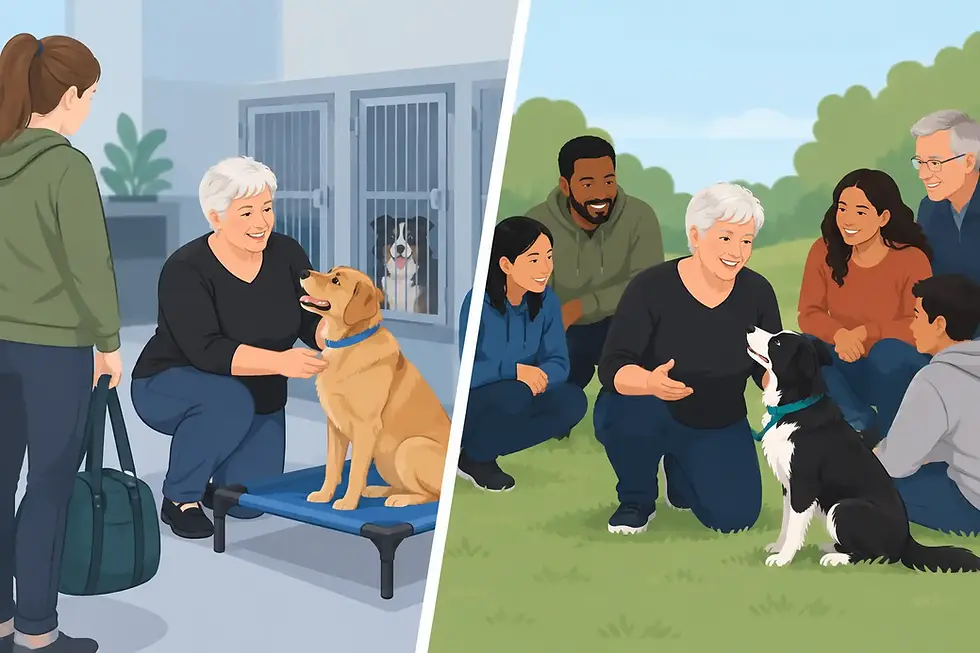
For families in the Greater Fredericksburg and Northern Neck areas, Ask Dr. Caryn provides individualized behavior support in the places daily challenges actually occur, including homes, veterinary settings, and appropriate public spaces. Court-related concerns deserve that same careful, practical attention.
After the Evaluation: Follow-Through Matters
A report is only useful if its recommendations become daily habits. The court may set deadlines or conditions, but the larger goal is preventing another incident. That can mean changing how visitors enter the home, keeping the dog separated during meals, practicing calm handling skills, maintaining secure barriers, or pausing activities that place the dog too close to known triggers.
Progress is not always linear. Some dogs improve quickly once pain is treated or predictable routines are established. Others need a longer behavior modification plan, especially when fear, guarding, or repeated bite behavior is involved. The household’s ability to follow through is part of the safety picture, and asking for help early is a responsible choice, not a failure.
Your dog’s future may feel as though it rests on one appointment, but responsible care begins with what happens next: honest management, informed training, and a commitment to making everyday life safer for everyone around your dog.

Comments